A real job in Southampton that started with a simple question — and ended with a long-term fix
“It’s getting hotter every year…”
That’s how the conversation started.
The customer had recently moved from Cyprus and said something I’m hearing more often now:
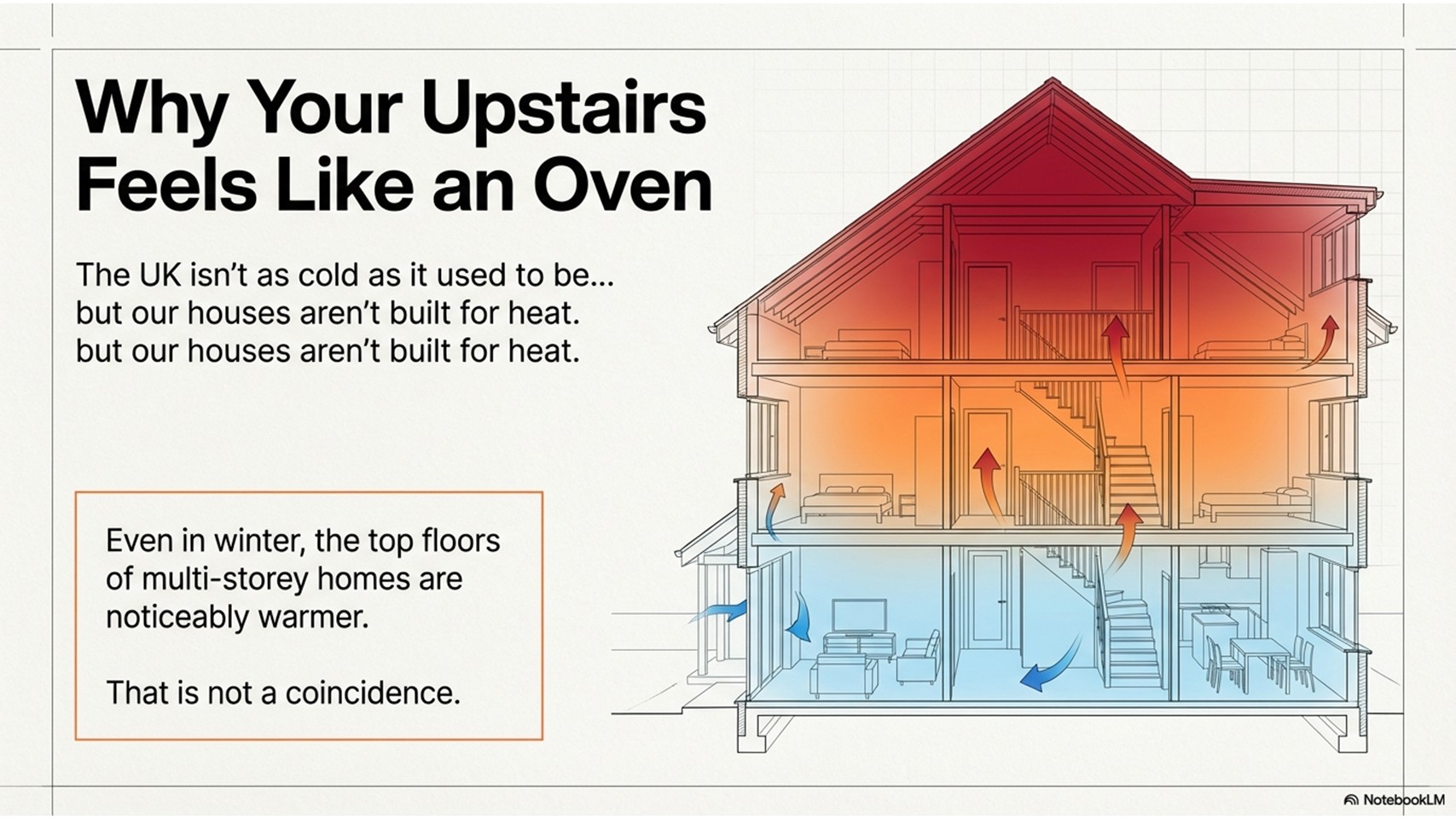
“The UK isn’t as cold as it used to be… but the houses aren’t built for heat.”
Three-storey house.
Loft space above.
And even in winter — the top floor was noticeably warmer.
That’s not a coincidence.
The problem most people don’t notice
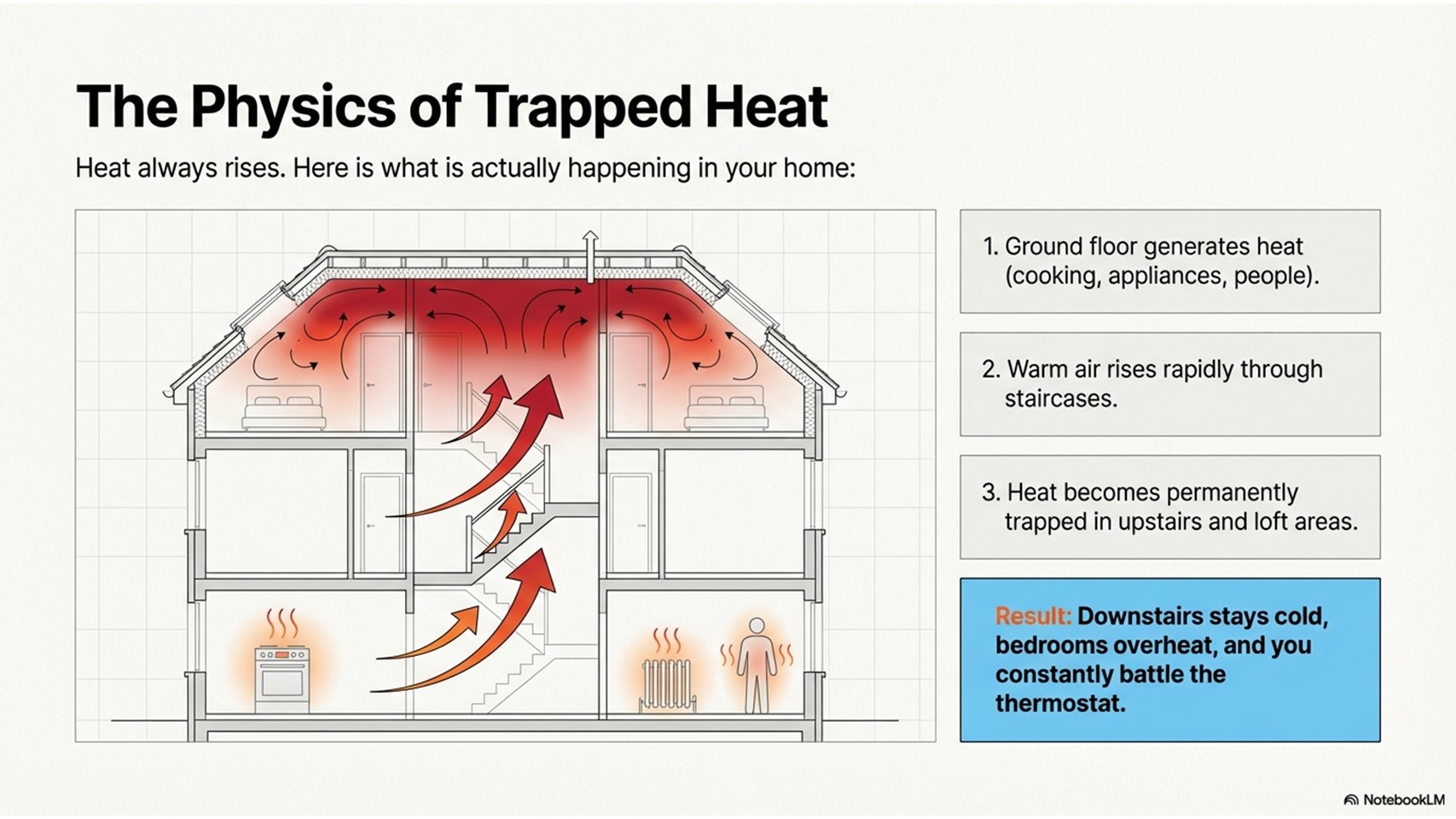
Heat always rises.
Sounds basic, but here’s what actually happens in your home:
- Ground floor generates heat (cooking, appliances, people)
- Warm air rises through staircases
- Gets trapped upstairs and in loft areas
- Lower floors stay cooler than they should
So you end up with:
- Cold downstairs
- Overheated bedrooms
- Constant adjusting of heating
👉 Most people try to fix this the wrong way.
What we discussed (and why most solutions fall short)
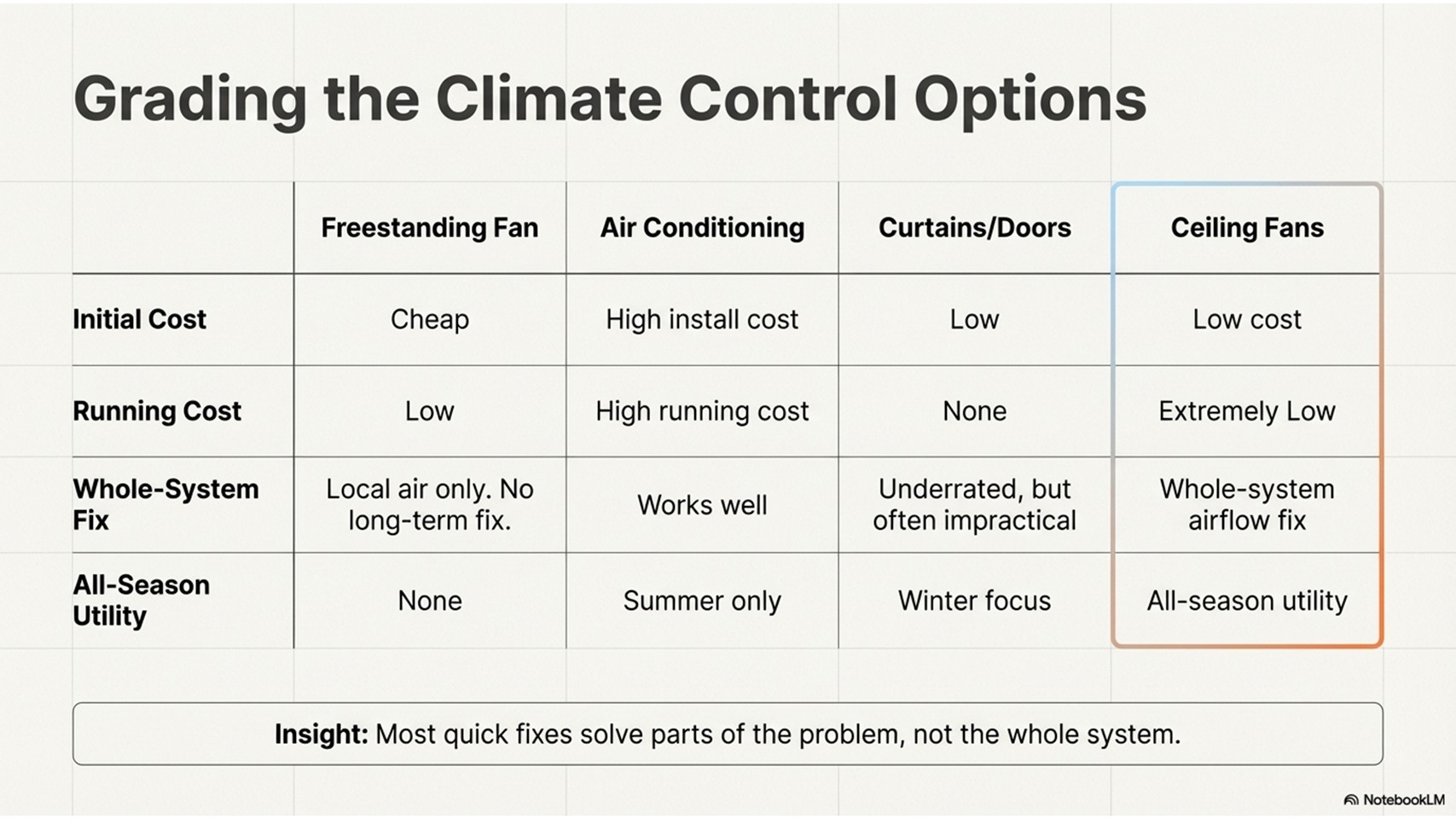
We went through the usual options:
1. Freestanding fans
✔ Cheap
❌ Only move air locally
❌ No long-term airflow improvement
2. Air conditioning
✔ Works well
❌ Expensive to install
❌ Expensive to run long-term
3. Underfloor heating
✔ Great for comfort
❌ Doesn’t solve airflow imbalance
4. Curtains or doors at staircases
✔ Helps trap heat
✔ Actually a very underrated fix
❌ Not always practical or desirable
👉 These all solve parts of the problem… not the whole system.
What actually works (from real experience)
Here’s where experience matters.
I’ve worked with customers from:
- Australia
- Caribbean
- South Africa
And they all bring the same habit with them:
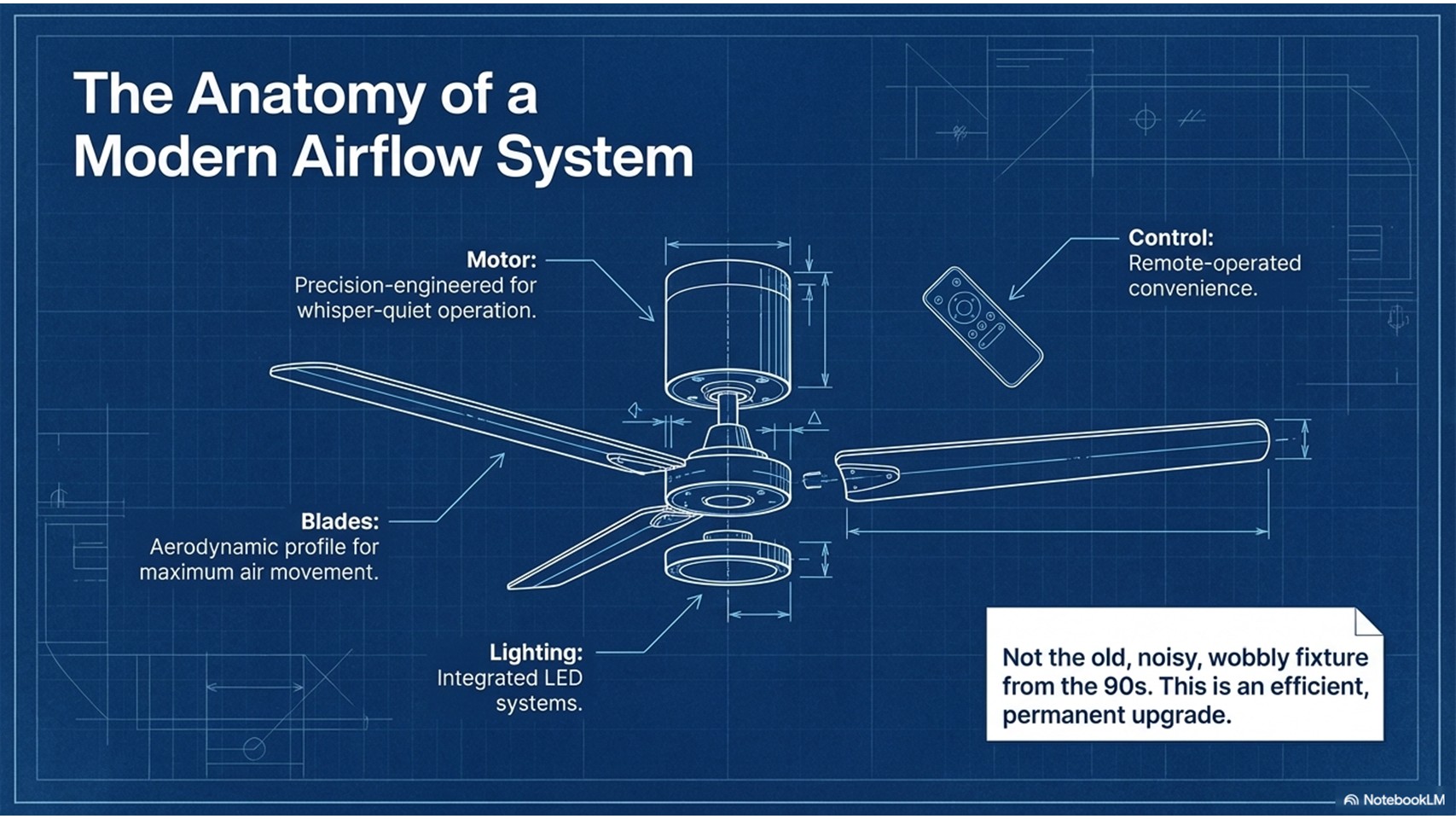
Not the old noisy ones you might be thinking of.
Modern ones are:
- Quiet
- Efficient
- Controlled by remote
- With integrated lighting
- Reversible for winter use
The solution we installed
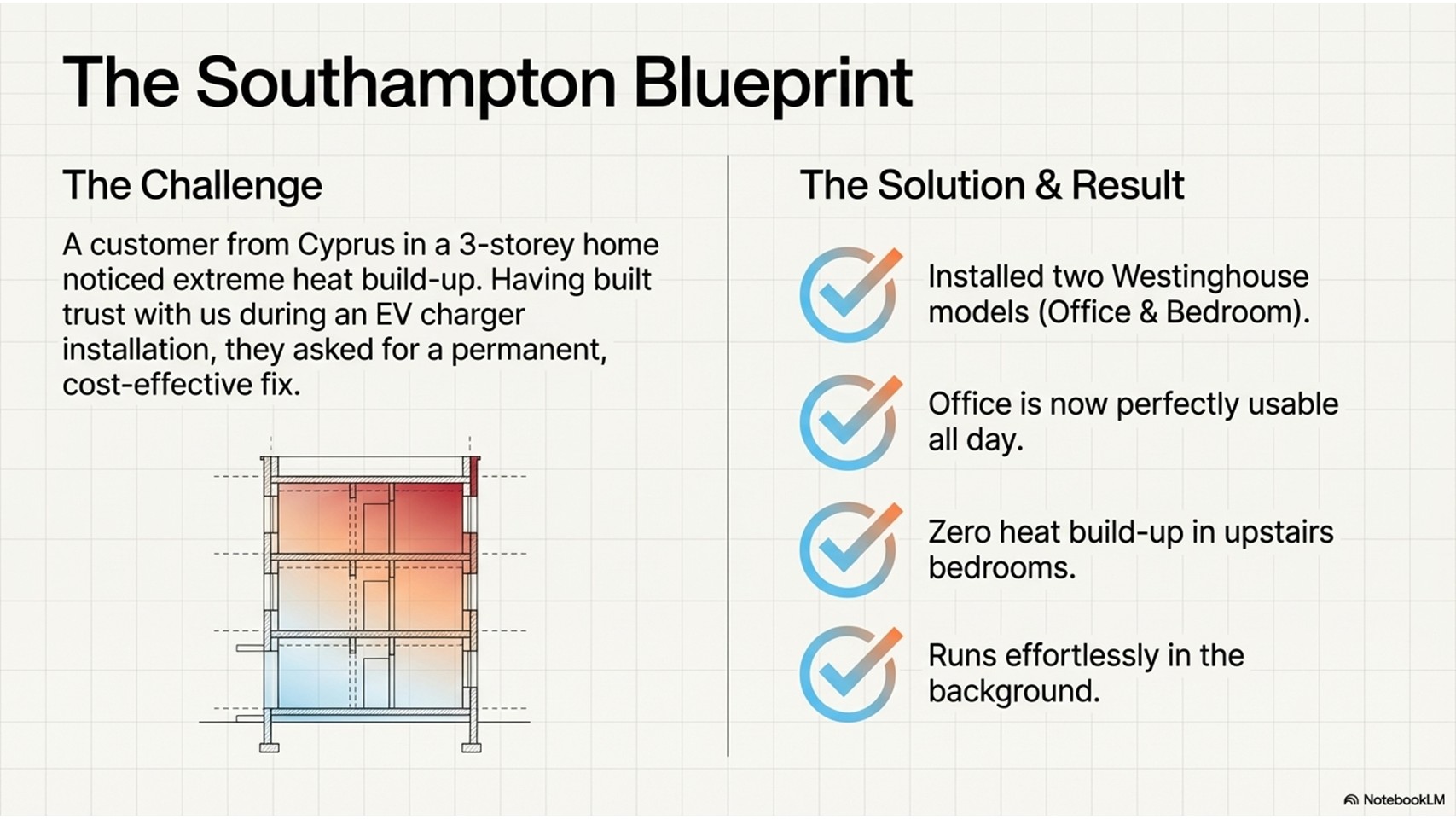
In this case, the customer didn’t want a temporary fix.
They wanted something:
- permanent
- cost-effective
- low running cost
- usable all year round
So we installed two ceiling fans using Westinghouse models:
- One in the office
- One in the bedroom
Why this works (and most people miss this)
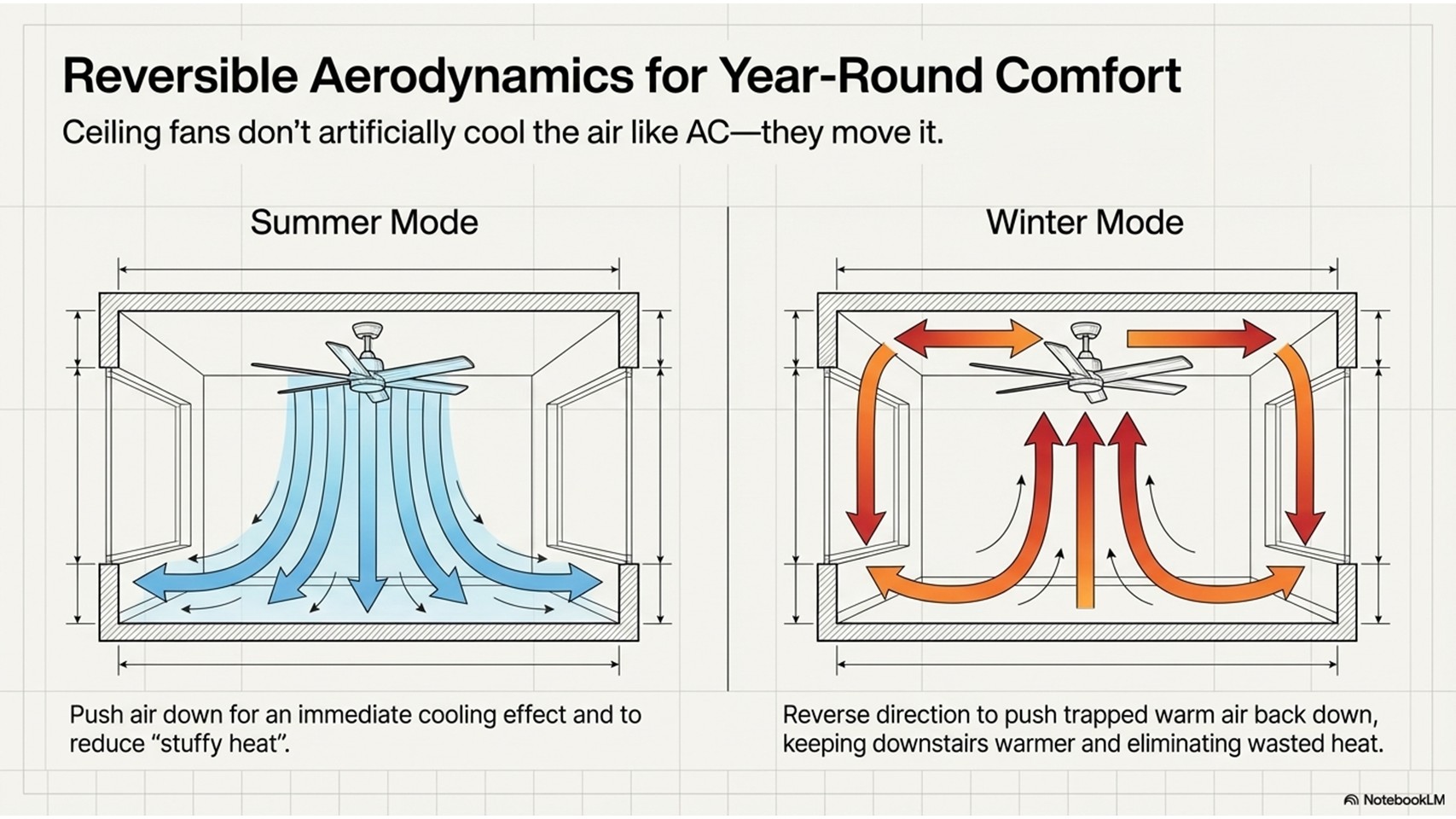
Ceiling fans don’t “cool” the air like AC.
They move air properly.
In summer:
- Push air down
- Create a cooling effect across the room
- Reduce that “stuffy heat” feeling
In winter (this is the part people don’t realise):
- Reverse direction
- Push trapped warm air back down
- Help heat circulate evenly
👉 That means:
- Warmer downstairs
- Less heat wasted upstairs
- More consistent temperature across the house
Running costs (this is where it wins)
This is why I like recommending them.
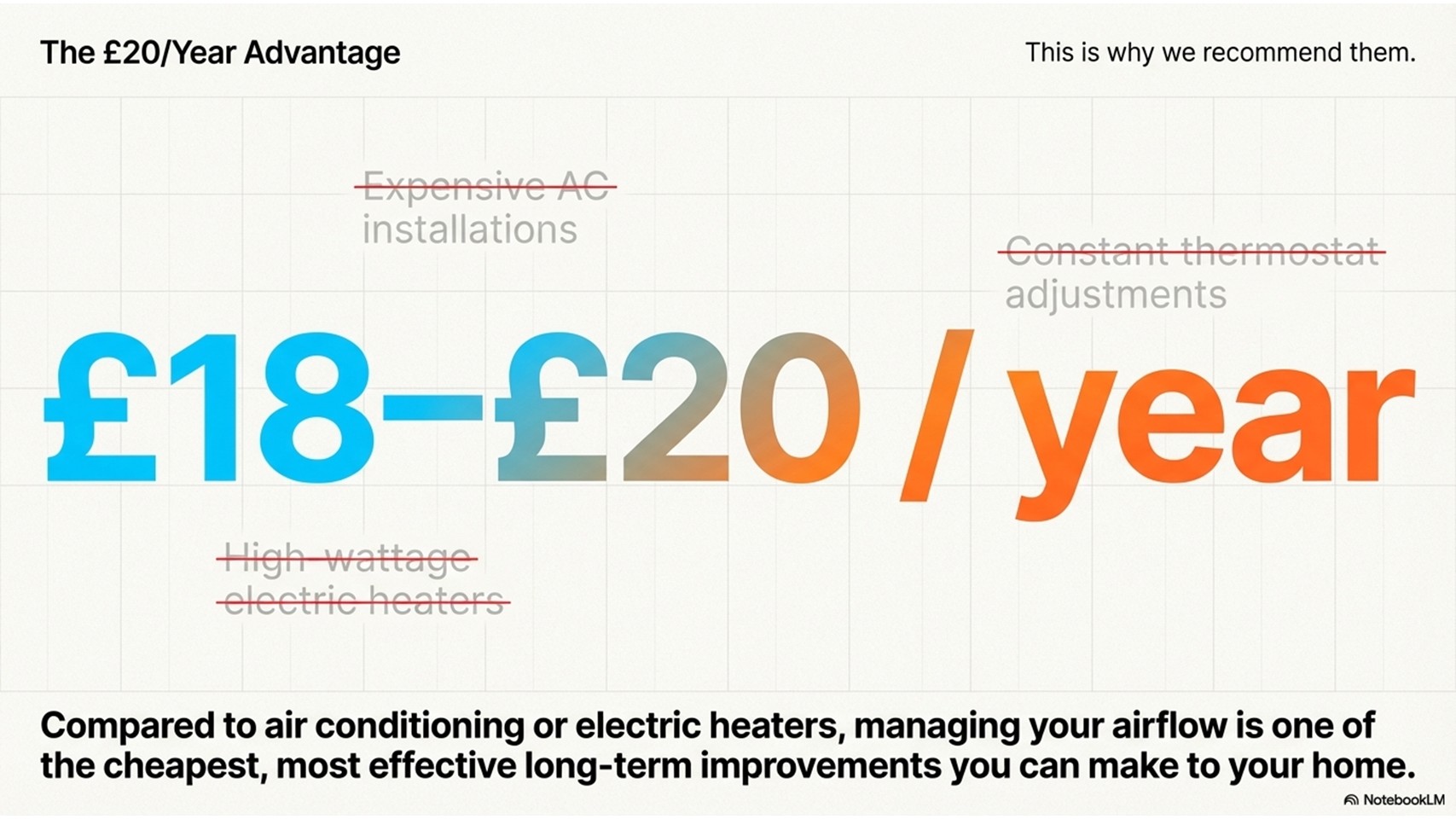
Running cost:
- Roughly £18–£20 per year if used regularly
Compare that to:
- Electric heaters
- Air conditioning
- Constant thermostat adjustments
👉 It’s one of the cheapest long-term improvements you can make.
The result
The customer already trusted us after installing an EV charger earlier.
After a few months, they decided to go ahead.
Now:
- Bedrooms are comfortable
- The office is usable all day
- No more heat build-up upstairs
- No need for expensive cooling systems
And most importantly:
It just runs in the background — no effort needed
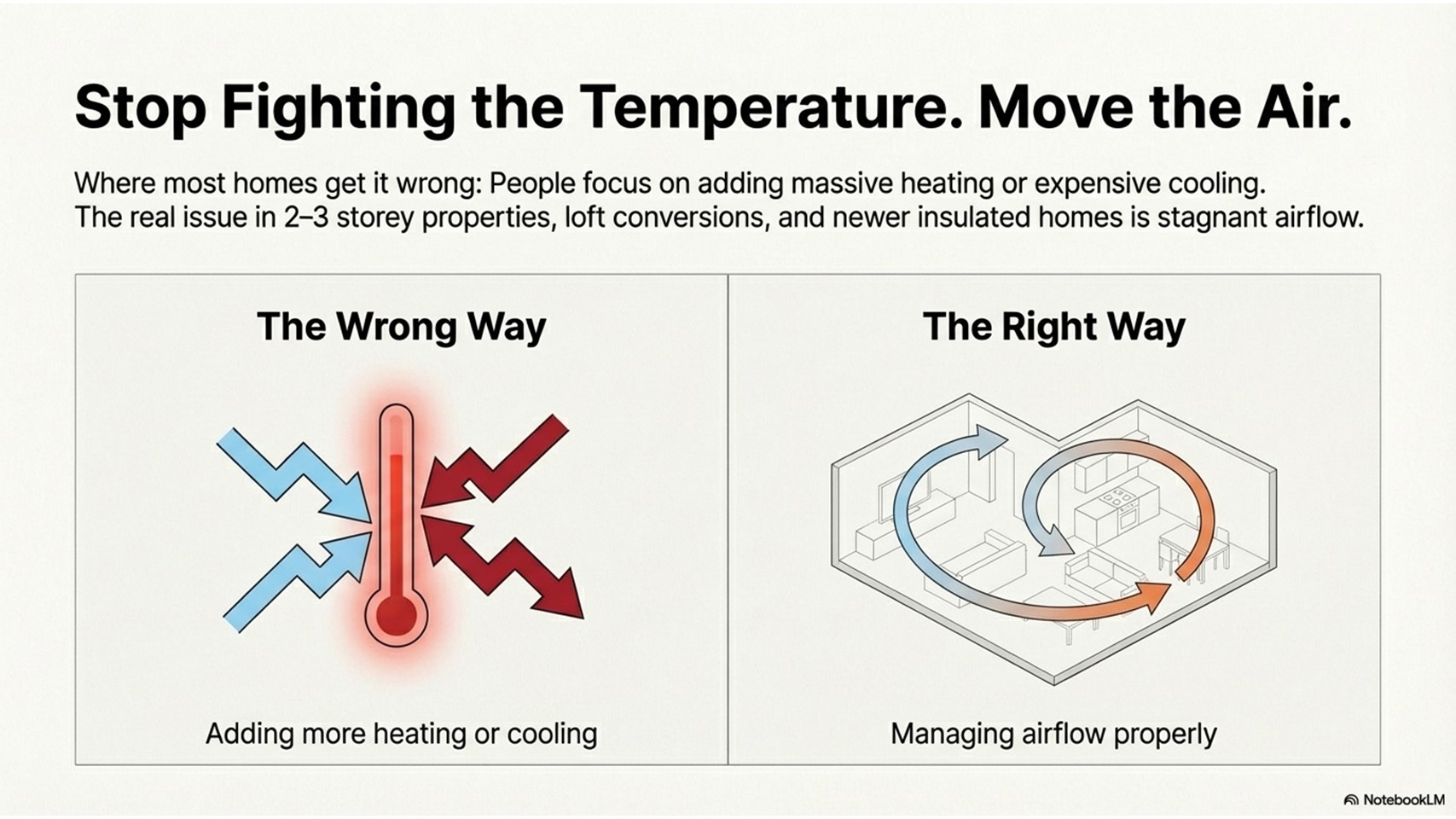
Where most homes get it wrong
People focus on:
- adding more heating
- adding more cooling
Instead of:
👉 managing airflow properly
That’s the real issue in most UK homes.
Especially:
- 2–3 storey properties
- loft conversions
- newer insulated homes
When this solution makes sense
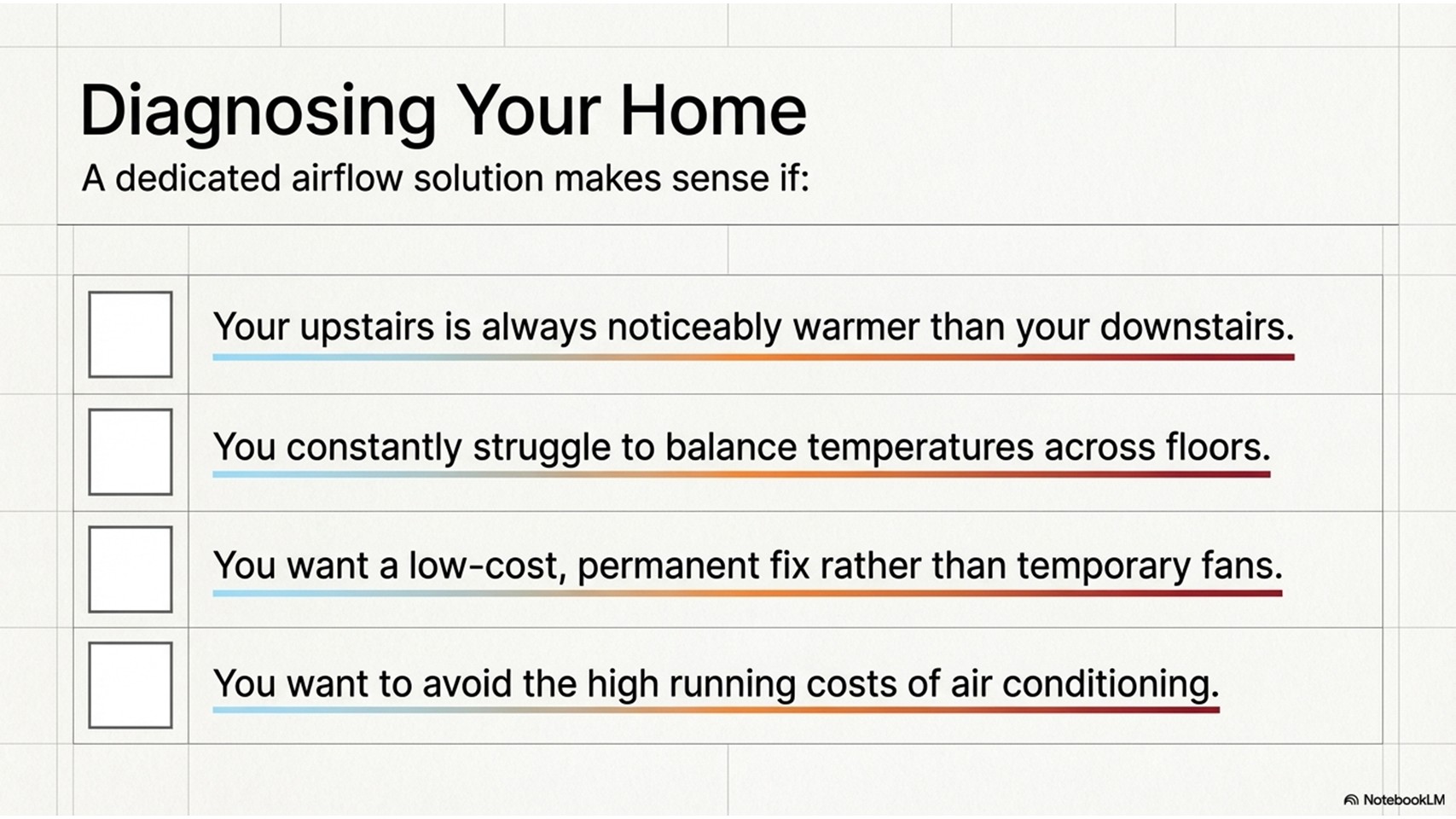
You’ll benefit most if:
- your upstairs is always warmer than downstairs
- you struggle to balance temperatures
- you want a low-cost, long-term solution
- you don’t want high running costs
Thinking about improving airflow in your home?
Every house is different.
Sometimes it’s:
- a simple fan
- better extraction
- airflow control between floors
If you’re not sure what’s actually causing the issue, it’s worth looking at it properly before spending money on the wrong fix.
📞 023 8181 0636
🌐 Solid Electrics
Or just send a few photos/videos of your setup — I’ll point you in the right direction.
What do you think?
Have you noticed your upstairs getting hotter over the years?
Or are you still trying to fix it with temporary solutions?