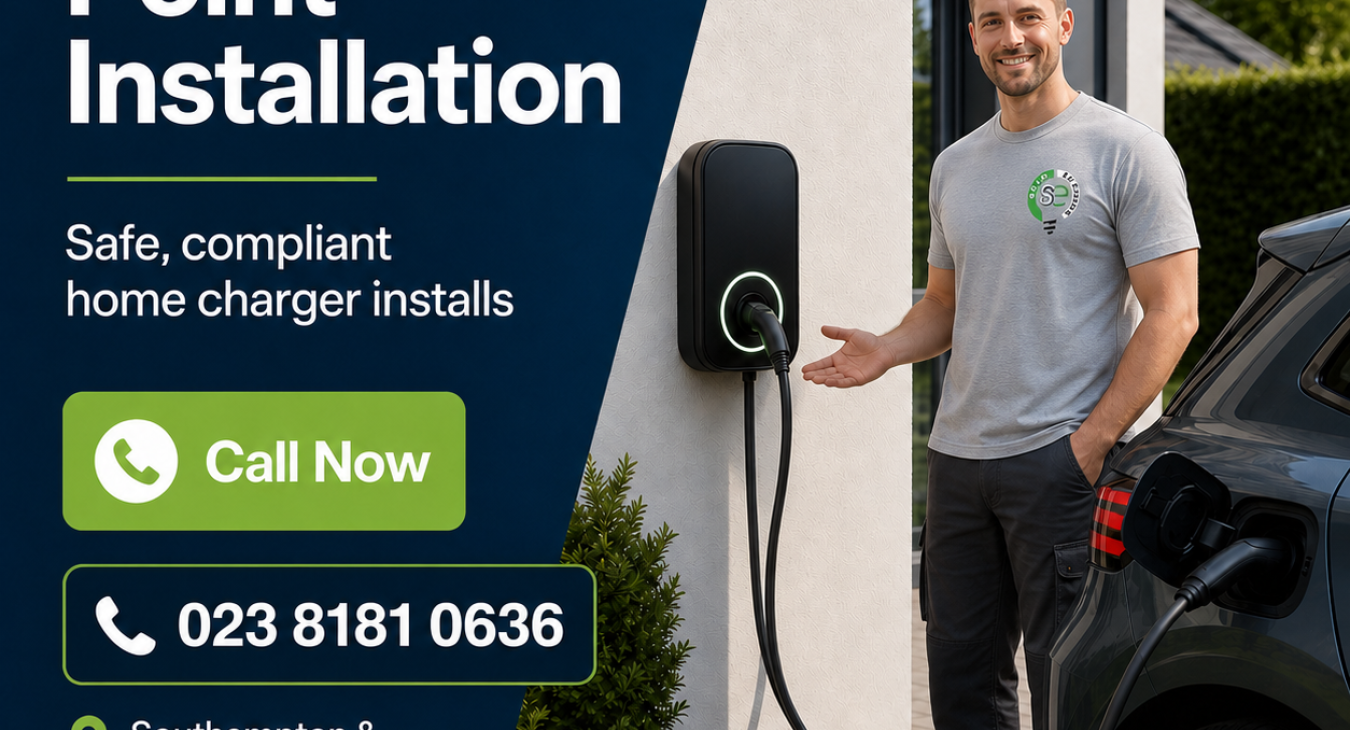
A practical guide from an EV charger installer in Southampton, covering charger choice, cable routes, consumer unit upgrades, safety, tariffs, and why the cheapest quote is not always the best option.
Safe, Compliant Home Charger Installation in Southampton and Surrounding Areas
EV charging point installation is not just a case of fixing a box to the wall and running a cable. A proper installation needs to be safe, compliant, practical, and suitable for your property, your vehicle, and the way you plan to charge.
Most domestic EV chargers will charge at around 7kW to 7.4kW, but the final installation can vary a lot from one property to another. The charger itself is only one part of the job. The consumer unit, cable route, earthing, load management, existing electrical installation, and customer requirements all matter.
Choosing the Right EV Charger for Your Home
One of the first decisions is what type of charger you want.
Tethered EV Charger
A tethered charger comes with a built-in charging cable. This is convenient because the cable is always ready to use. You simply plug it into the car and start charging.
This option can be useful if you want quick daily charging without getting a separate cable out of the boot every time.
Untethered EV Charger
An untethered charger has a socket, and you use your own charging cable.
Some customers prefer this because it looks tidier when not in use. It can also be useful if you want flexibility with different cable lengths or future vehicles.
Charger Brand and Energy Tariff Compatibility
Many customers choose a charger because it works with their current energy supplier or smart tariff. That can make sense, but it is worth being careful.
Energy suppliers can change which charger brands they support. A charger that works with a certain tariff today may not always get the same level of support later. You may still have access to off-peak charging, but the hours, rates, or smart features could change depending on your supplier.
My advice is to choose a recognised EV charger brand with good technical support, customer support, and installer support. Cheap chargers can look attractive at first, but if the support is poor, future issues can become frustrating for both the customer and installer.
What Information Is Needed Before Quoting?
A realistic EV charger quote usually needs more than one photo.
Photos of the Consumer Unit and Meter Area
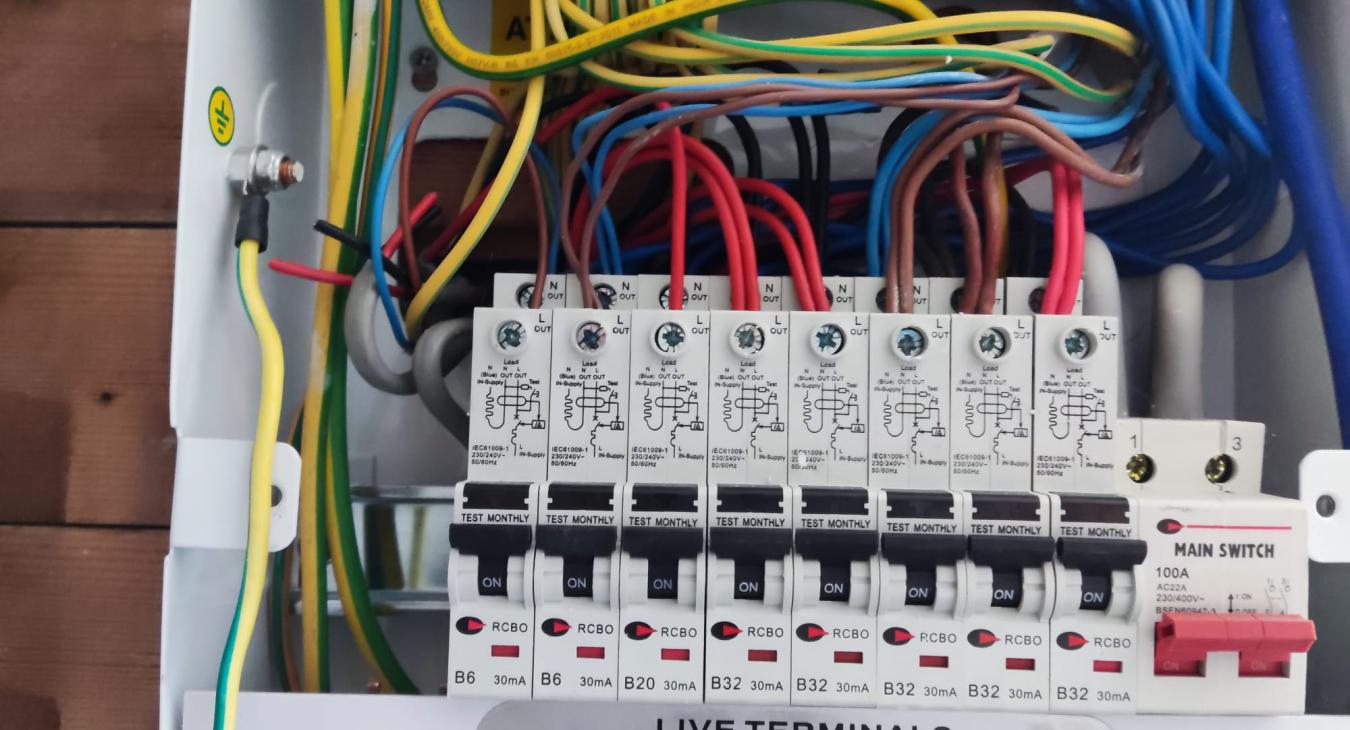
The consumer unit is one of the most important parts of the installation. Even if it was fitted only five or eight years ago, it may not be suitable for an EV charger under current standards.
The installer needs to check whether there is space, whether the protective devices are suitable, and whether extra equipment may be needed.
Video of the Cable Route
A short video from the consumer unit to the proposed charger location is very useful. It helps show the route, cupboards, walls, access points, outside areas, and any possible obstacles.
This is especially important if you want to avoid visible cables or wall damage.
Parking Space and Charger Location
The position of the car matters. The charger needs to be practical for daily use, but also sensible from an installation point of view.
Sometimes the first location suggested by the customer is not the best one. A slightly different position can reduce cable length, avoid unnecessary wall damage, or make the installation neater and safer.
Why the Consumer Unit Matters
The consumer unit is often the hidden issue in EV charger installations.
No Spare Ways
Some consumer units do not have enough spare space for a new EV charger circuit. Even newer boards can be full if they were fitted cheaply with no allowance for future upgrades.
Older RCD Setups
Older installations may have one RCD protecting several circuits. For EV charging, the protective setup needs to be suitable for a high-load dedicated circuit.
A modern installation may require a separate RCBO or additional consumer unit, depending on the property and charger design.
Surge Protection
Surge protection is now an important consideration. It helps protect the electrical installation and connected equipment against overvoltages from the supply network.
For an EV charger installation, this is especially relevant because the vehicle is an expensive piece of equipment connected to the house supply for long periods.
Off-Peak Boards
Some properties have old off-peak consumer units, often from previous electric heating systems. These are not always suitable for an EV charger.
Even if there is spare space, the board may only be energised during off-peak hours. That means you may not be able to top up the car during the day if needed.
EV Charger Installation Is Not Just “Running a Cable”
A proper EV charging point installation includes much more than fitting a charger to the wall.
Regulations and Safety
Customers do not need to know every regulation, but the installer does. The installation must be designed so it is safe under normal use and fault conditions.
If something goes wrong, the vehicle body could become dangerous if the installation has not been designed and protected correctly. That is why proper earthing, protection, testing, and certification matter.
Load Management
An EV charger is a high-consumption device. Load management helps protect the property from overload by monitoring demand and reducing charging output if necessary.
This is especially important where the house already has high electrical demand.
DNO Notification
The Distribution Network Operator, often called the DNO, needs to be notified when an EV charger is installed. This lets the network operator know that a high-load device has been connected to the property.
This is part of doing the job properly, not an optional extra.
Testing and Certification
The new circuit must be tested and certified. This confirms that the installation has been checked and that the work has been carried out correctly.
A proper installer should be willing to explain what has been installed, how it is protected, and what paperwork will be provided.
Real Example: When Charger Choice Changed the Installation
One customer wanted a Tesla charger installed at their property. That particular setup required additional equipment, including a dedicated consumer unit with extra features such as PEN protection and load management.
After inspecting the property, it became clear that installing the additional consumer unit in the preferred way would create visible equipment in a location the customer was not happy with.
After discussing the options, we agreed to use the available space for a smaller consumer unit and install a different charger that worked better for the property and was compatible with a wider range of energy suppliers.
This is why proper discussion matters. A good installation is not always about forcing the original idea through. Sometimes the best result comes from putting all options on the table and choosing the most practical, compliant solution.
7.4kW vs 22kW EV Chargers
Many customers ask for the fastest charger possible, but faster is not always useful or practical.
7.4kW Home Chargers
For most domestic properties, a 7.4kW charger is the standard option. Most UK homes have a single-phase supply, and 7.4kW is usually suitable for overnight charging.
For many drivers, this is enough to fully recharge or significantly top up the vehicle during off-peak hours.
22kW Chargers
A 22kW charger requires a three-phase supply. Many domestic properties do not have this.
Also, not all vehicles can accept 22kW AC charging. Some cars may only accept around 7kW or 11kW to 14kW on AC, so installing a 22kW charger may not give the expected benefit.
Commercial EV Charging
In commercial settings, three-phase supply can be useful. But instead of installing one 22kW charger, it may sometimes be better to install multiple 7.4kW chargers across different phases.
For example, if a business has several vans charging overnight, three separate chargers may be more practical than one faster charger.
What Affects the Cost of EV Charger Installation?
There is no fixed price that applies to every property. Every house is different.
Charger Brand
Recognised charger brands usually come with better support, better app experience, and better installer backup. They may cost more than budget options, but the support can be worth it.
Cable Length and Route
A short, straightforward cable run will usually cost less than a long or complicated route.
If the cable needs to go through cupboards, around a kitchen, through a loft, externally around the building, or through difficult access areas, this can affect the price.
Consumer Unit Upgrades
Some properties need additional protection, a small EV consumer unit, surge protection, or even a consumer unit upgrade before the charger can be installed properly.
Making Good and Appearance
Some customers want no visible cables and no damage to walls. That can be possible in some cases, but it may take more time and planning.
A neat installation often requires more thought than the quickest installation.
Questions to Ask Before Booking an EV Charger Installer
Before choosing an installer, it is worth asking a few sensible questions.
Are They Qualified and Registered?
Ask whether the installer is qualified, registered with a competent person scheme such as NAPIT, and trained in EV charger installations.
Do They Install That Brand Regularly?
An installer who regularly works with a certain charger brand is more likely to understand the setup, app, commissioning process, and common issues.
Do They Notify the DNO?
DNO notification should be part of the process. If an installer does not mention it, ask why.
Will They Test and Certify the Work?
A proper installation should include testing and certification. You should know what paperwork you will receive after the work is complete.
Do They Offer Aftercare?
Sometimes chargers need a reset after a software update, app change, or communication issue. It helps if your installer can give basic guidance after the installation rather than disappearing once the job is finished.
Do They Provide a Written Quote?
A written quote should explain the scope of work. It should also make clear what happens if something changes once the job starts.
Cheap EV Charger Installation Can Cost More Later
The strongest advice I would give is this: if you pay cheap, you may pay twice.
Most EV chargers may look similar from the outside, but the quality of the installation, the protection used, the charger support, and the installer’s knowledge make a big difference.
A low price may mean corners are being cut. It may also mean the installer has not allowed enough time to explain the options, assess the consumer unit, plan the cable route properly, or complete the paperwork correctly.
When an installer signs off the installation, they are putting their name, insurance, and reputation behind that work. That matters.
EV Charger Installation in Southampton
Solid Electrics Limited installs EV charging points across Southampton and surrounding areas. We focus on safe, compliant installations, practical cable routes, recognised charger brands, and clear communication before the work starts.
Get a Quote for Your EV Charger Installation
To discuss EV charging point installation for your home, call 023 8181 0636 or visit: