How do you organise a working day at home when the electricity will be off? That is one of the practical questions to settle before replacing a consumer unit, often called a fuse box.
The appointment involves checking the circuits connected to the board as well as installing new equipment. Knowing the scope beforehand helps you plan access, working from home and any equipment that must remain powered.
Start with the existing installation
We need to understand the board, the incoming supply and the circuits it serves. Photographs are a useful starting point, but they cannot confirm the condition of hidden wiring. Depending on the information available, further inspection or testing may be needed before the work is priced.
The quote should identify the proposed consumer unit, protection, testing and any known associated work. If an existing report recommends repairs, send the complete report so those findings can be considered. A consumer unit upgrade should have a clear scope rather than an assumption that every existing circuit is fault-free.
Prepare for the power interruption
Clear access to the board and tell us about alarms, solar panels, batteries and any equipment with another power source. Mention medical equipment or anything that cannot tolerate an interruption before choosing a date, so you can arrange suitable continuity of supply.
Save computer work and plan around the loss of your router and heating controls. Keep fridge and freezer doors closed and follow the appliance manufacturer's guidance. Agree an estimated outage with us for your property; a generic promise of a particular finish time would not account for circuit faults or difficult access.
Replacement and circuit checks
The supply must be safely isolated before the board is removed. Any work involving network or metering equipment needs the appropriate arrangements. Homeowners should leave sealed equipment and internal covers alone.
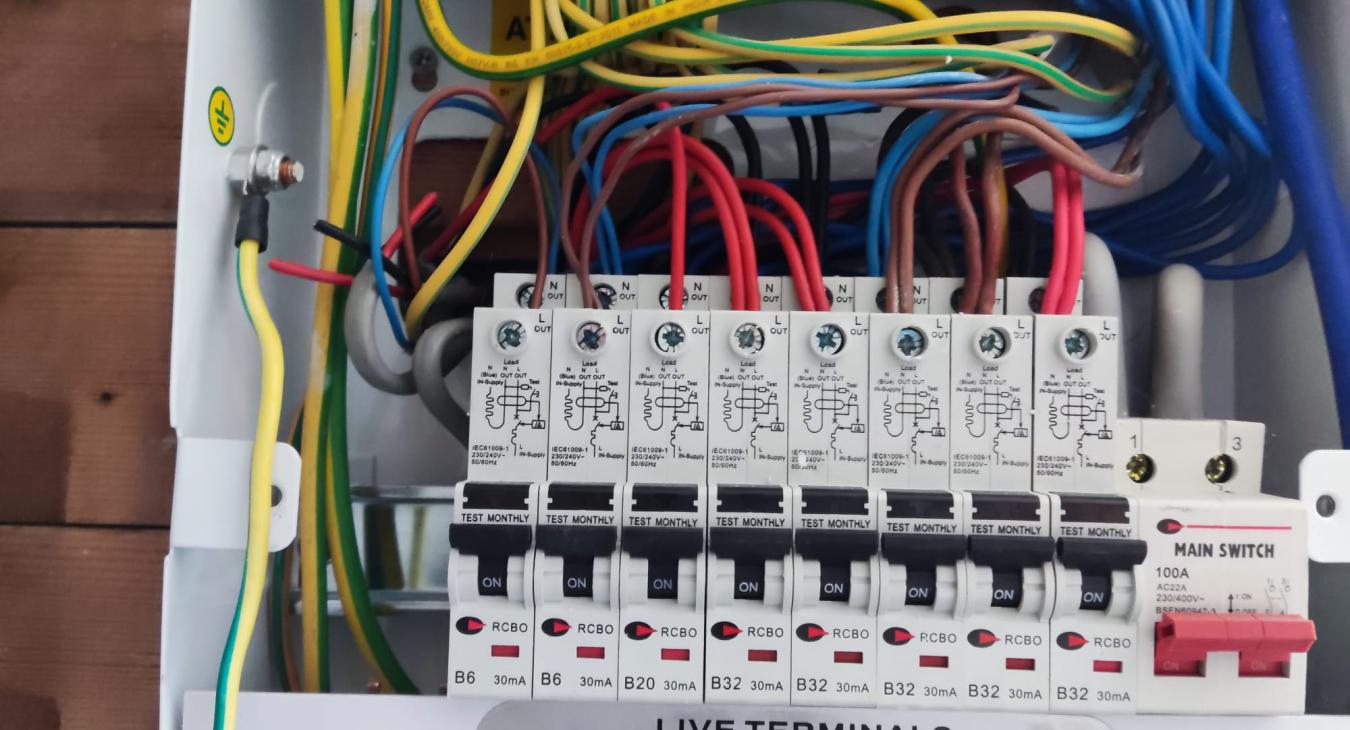
The new equipment is selected for the installation. Individual RCBOs can limit the disruption from some faults to the affected circuit, while surge protection serves a different purpose. Neither replaces the need for sound wiring and proper connections.
Existing circuits are assessed and tested as part of the work. Where a circuit needs investigation, we explain the finding and the next step. It may be possible to restore unaffected circuits safely, but that depends on the actual arrangement and results.
What happens if extra work is found?
A quotation should explain how unexpected defects will be handled. A damaged cable or unsuitable existing connection may require additional work before the affected circuit can be used. Ask which work is included and how any investigation is charged.
An EICR and a consumer unit replacement are different services. An earlier report can help with planning, but it does not remove the need to test the new work or guarantee that nothing else will be found.
Handover and records
The handover should explain the circuit labels, protective-device controls and any remaining limitations. Keep the Electrical Installation Certificate and the Building Regulations compliance documentation applicable to the work in England. Agree when the paperwork will be delivered rather than assuming every document is issued before the electrician leaves.
The useful outcome is a properly assessed installation, clear records and an understanding of what has changed. Start with the board and circuit information, then organise the replacement around your household's needs.
Frequently asked questions
Will the power be off all day?
It may be off for a substantial part of the appointment. We agree an estimate after assessing the installation and explain if findings change it.
Does a new consumer unit mean a full rewire?
No. The existing wiring needs assessment, and any repairs or rewiring should follow evidence from inspection and testing.
Can I work from home during the job?
Plan for mains-powered equipment and broadband to be unavailable. Arrange an alternative if your work depends on a continuous connection.
What paperwork should I keep?
Keep the Electrical Installation Certificate and any applicable Building Regulations compliance documentation. These describe the work and provide a record for future maintenance.
Discuss the next step
If you are planning a fusebox replacement in Southampton or the surrounding area, send us your postcode, a few photos and a short description of what you need. We can advise on the next step.
Discuss your fusebox replacement
About the author
Shem Wojtowicz runs Solid Electrics Limited and has nearly 10 years of electrical experience. He is a NAPIT registered inspector serving Southampton and the surrounding area.