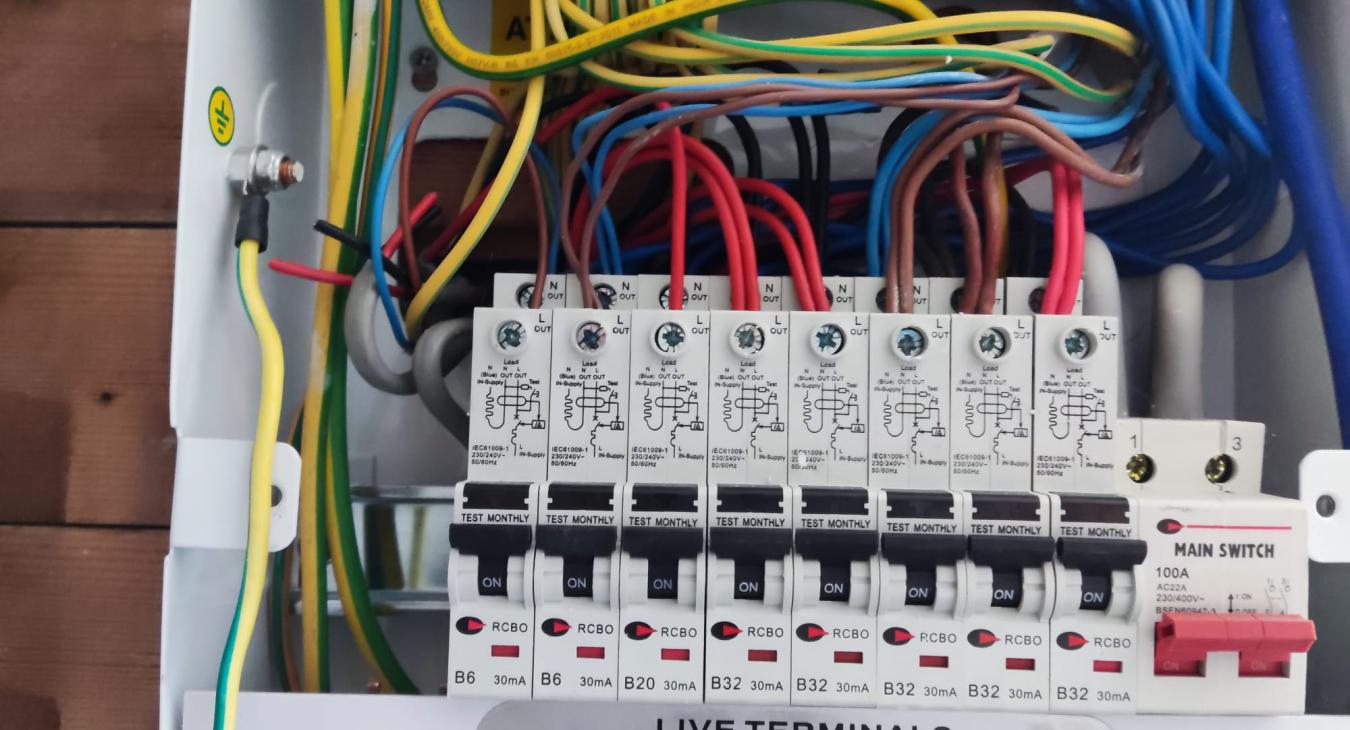
What happens if testing identifies a problem while your consumer unit is being replaced? A low insulation resistance reading needs investigating before conclusions are drawn about the cable or the new board.
The immediate questions are what was tested, what was connected during the test and which part of the installation is affected. One reading does not, by itself, prove that the whole house needs rewiring.
What the test is checking
Insulation separates conductors from each other and from parts they should not contact. Testing helps assess that separation. A result that needs attention may be associated with damaged insulation, moisture, accessories or connected equipment.
The electrician must select a suitable test method and account for equipment that could influence the result or be damaged by testing. Homeowners should not disconnect accessories or attempt these tests themselves.
Establish the cause before choosing the repair
A useful explanation identifies the affected circuit and distinguishes a confirmed defect from a possible cause. An installation fault, an appliance problem and an unsuitable test arrangement are different things and call for different responses.
Testing associated with a consumer unit replacement can reveal existing problems, but it would be wrong to rule out installation errors without checking. The timing of a fault is a clue rather than proof of responsibility.
Understand the investigation
Tracing the problem may involve separating parts of a circuit and inspecting accessible connections. The work depends on the circuit arrangement and access. A hidden cable route may require more time than a damaged accessory that can be inspected directly.
Our electrical fault finding is time-based because the cause and the time needed to locate it are initially unknown. Agree the charging basis and how updates will be handled before further investigation starts. A fixed repair price may become possible once the defect is understood.
Keep power restoration realistic
Where safe and practical, unaffected circuits may be restored while a defective circuit remains isolated. Shared wiring, the nature of the defect and the installation arrangement can affect what is possible.
Ask which rooms or appliances will remain unavailable and what temporary arrangements are suitable. Do not reconnect an isolated circuit or improvise a supply from another circuit to get around the problem.
Compare repair options
The appropriate work might be replacement of an accessory, repair of an accessible section, a new cable route or wider circuit replacement. Widespread deterioration can justify more extensive work, but that recommendation should be supported by findings.
Ask what each option includes, whether it changes how the circuit can be used, and who handles access and making good. A lower initial price may involve a visible cable route; a concealed repair may require flooring or plaster to be opened.
Reduce uncertainty before the appointment
Send any previous condition report, details of intermittent tripping and information about recent leaks or alterations. Useful history helps plan the assessment, although it cannot guarantee that every concealed defect will be found in advance.
The aim is to leave you with a clear explanation, a safe arrangement and appropriate records for the work completed. A failed test is information to act on carefully, rather than a reason to approve an unspecified rewire immediately.
Frequently asked questions
Does a low reading always mean damaged cable?
No. Connected equipment, accessories and the test arrangement can affect the result. The cause needs confirming before selecting a repair.
Can the rest of the house have power?
Sometimes unaffected circuits can be restored safely. That depends on the wiring arrangement and the nature of the problem.
Is fault finding included in the replacement price?
Check the agreed scope. Additional investigation and repairs should have a clear charging basis before they proceed.
Will I need a full rewire?
A local defect may have a local repair. Extensive rewiring needs evidence of a wider problem or a separately agreed improvement plan.
Discuss the next step
If you are planning similar work in Southampton or the surrounding area, send us your postcode, a few photos and a short description of what you need. We can advise on the next step.